How Long Do You Boil Potatoes? A Simple Guide for Perfect Results Every Time
Knowing how long to boil potatoes is one of those basic kitchen skills that makes a big difference in your final dish. Too little time and they’re hard and undercooked; too much time and they turn mushy and fall apart.
Boiling time depends on a few key things: the size of the potatoes, whether they’re whole or cut, and the type of potato you’re using.
Small, chopped potatoes cook much faster than large, whole ones. When you get the timing right, you’ll end up with perfectly tender potatoes that work beautifully for mashed potatoes, salads, soups, or side dishes.
Once you understand the basics, boiling potatoes becomes easy, reliable, and stress-free.
What Affects How Long Potatoes Take to Boil?
Several factors influence boiling time, and understanding them helps you avoid uneven or overcooked potatoes.
Size is the biggest factor. Small cubes cook quickly, while large whole potatoes need more time to soften all the way through. Cutting potatoes into evenly sized pieces ensures they finish cooking at the same time.
Potato variety also matters. Starchy potatoes cook differently than waxy ones, and all-purpose potatoes fall somewhere in between.
Peeled potatoes usually boil a little faster because the skin acts as a protective layer. Lastly, always make sure the potatoes are fully submerged, with about an inch of water above them, for even heat distribution.
Also Read: How Many Tablespoons in an Ounce? A Simple Kitchen Conversion Guide
How Long to Boil Potatoes? It Depends on the Type
Different potatoes have different starch and moisture levels, which directly affect cooking time and texture.
1. Starchy Potatoes (Russet)
Russet potatoes are high in starch and ideal for fluffy mashed potatoes.
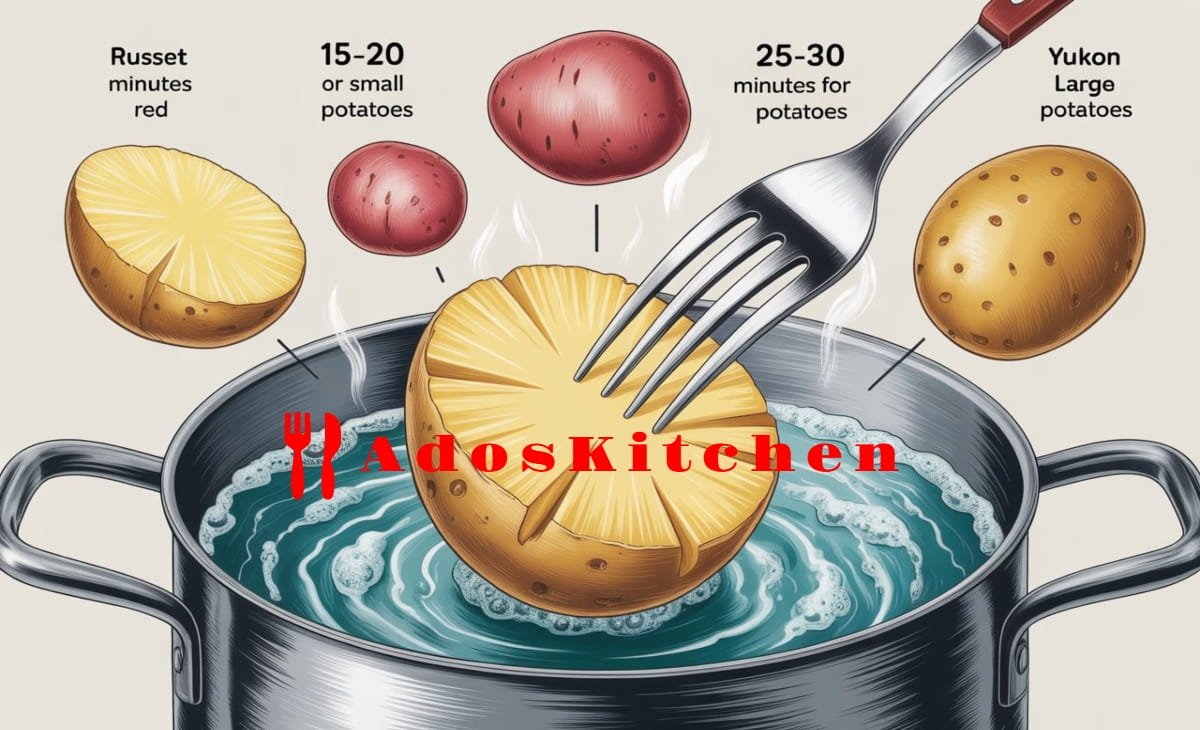
- Cubed russets: 10–15 minutes
- Whole medium russets: 20–25 minutes
They soften quickly and absorb water easily, which is why they mash so well. However, they can fall apart if boiled too long, so it’s best to keep an eye on them.
Tip: Start checking for doneness a few minutes early to avoid overcooking.
2. Waxy Potatoes (Red, New, Fingerling)
Waxy potatoes hold their shape well and are great for salads and side dishes.
- Small whole red or new potatoes: 15–20 minutes
- Fingerling potatoes: 10–15 minutes
These potatoes stay firm and creamy instead of fluffy, making them perfect when you want neat, intact pieces.
Tip: Avoid overboiling, as they won’t get creamier—just waterlogged.
3. All-Purpose Potatoes (Yukon Gold)
Yukon Gold potatoes are versatile and work well in most recipes.
- Cubed Yukon Golds: 12–15 minutes
- Whole medium Yukon Golds: 18–22 minutes
They have a naturally buttery flavor and a smooth texture that’s excellent for mashing, soups, or roasting after boiling.
Tip: These potatoes strike a balance between holding shape and becoming creamy.
How to Boil Potatoes the Right Way
Following a simple method ensures your potatoes cook evenly and reach the perfect texture.
Step 1: Wash potatoes thoroughly, peel if desired, and cut into evenly sized pieces.
Step 2: Place potatoes in a large pot and cover with cold water by about one inch. Add salt.
> Step 3: Bring the water to a boil over high heat.
> Step 4: Reduce heat to a gentle simmer and cook based on size and type.
> Step 5: Test with a fork; it should slide in easily with no resistance.
Starting potatoes in cold water helps them cook evenly from the inside out instead of softening too fast on the outside.
Should You Boil Potatoes With the Lid On or Off?
This is a common question, and the best answer is: use both.
| Lid Position | Why Use It | When to Use |
| Lid On | Heats water faster | While bringing water to a boil |
| Lid Off | Prevents overflow, better control | During simmering |
| Best Method | Faster boil + even cooking | Lid on to boil, off to simmer |
This approach helps you save time while keeping the potatoes from overcooking or boiling over.
How to Tell When Potatoes Are Fully Cooked
The easiest way to check is the fork or knife test. Insert a fork or knife into the potato.
If it slides in easily and comes out clean, the potatoes are done. If there’s resistance, they need more time.
Start testing a few minutes before the expected finish time. This prevents overcooking and helps you stop at just the right moment.
Easy Ways to Use Boiled Potatoes
Boiled potatoes are incredibly versatile and can be used in many quick meals.
1. Potato Salad
Firm boiled potatoes work best for salads. Toss them with mayo or yogurt, mustard, chopped onions, celery, and fresh herbs for a classic side dish.
2. Potato Soup
Soft-boiled potatoes are perfect for soup. Blend part of them for creaminess and leave some chunks for texture. Add broth, garlic, onions, and seasoning.
3. Crispy Roasted Potatoes
Boil potatoes until just tender, then roast them with olive oil and herbs. This method gives you a crispy outside and fluffy inside.
How to Store Boiled Potatoes
If you have leftovers, proper storage keeps them fresh and usable.
- Let potatoes cool completely before storing
- Place them in airtight containers
- Refrigerate for up to 3–4 days
- Avoid wrapping in foil, which traps moisture
Stored properly, boiled potatoes are great for meal prep and quick meals later in the week.
Final Thoughts
Understanding how long to boil potatoes helps you get consistent, delicious results every time.
By paying attention to potato type, size, and doneness, you can avoid common mistakes like undercooking or mushiness. Whether you’re boiling potatoes for mashing, salads, or roasting, timing is the key.
Once you get comfortable with these guidelines, boiling potatoes will feel effortless—and your dishes will taste better because of it.