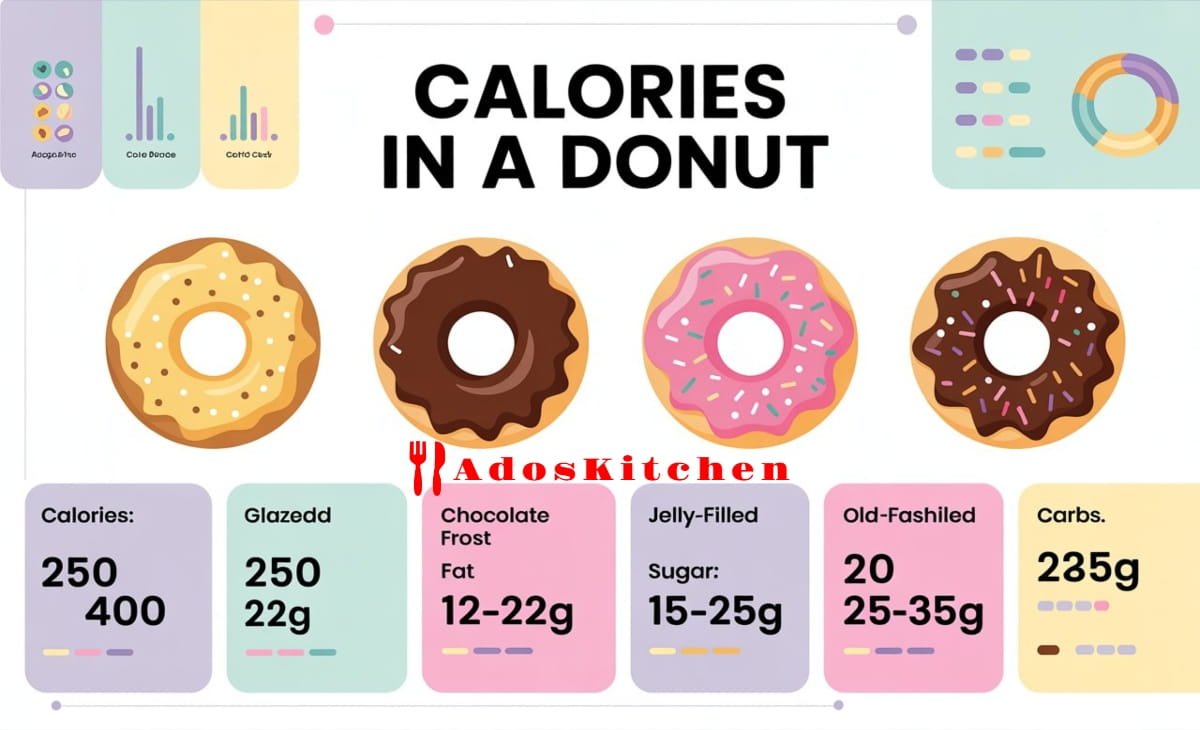
Calories in a Donut: What You’re Really Eating With Every Bite
Imagine walking past a bakery early in the morning.
The scent of warm sugar, butter, and fresh coffee drifts through the air. Behind the glass, rows of glossy glazed donuts sparkle under soft lights.
Your stomach growls. Your hand almost reaches out…
Then a thought hits you:
“How many calories are in a donut?”
You’re not alone. Donuts are one of the most loved treats in the world—but they’re also packed with calories, sugar, and fat. Whether you’re counting calories or just curious, understanding what’s in a donut helps you enjoy it without regret.
Let’s break down the average calories in a donut, explore old-fashioned donut calories, and compare popular donut varieties so you know exactly what you’re biting into.
Why Calories in a Donut Matter
Calories aren’t bad. They’re simply units of energy your body uses to function—breathing, walking, thinking, and even sleeping.
The issue starts when calorie intake regularly exceeds what your body burns. Those extra calories don’t disappear; they’re stored as fat over time.
That’s why knowing the calories in a donut matters. Awareness gives you control. Instead of avoiding donuts completely, you can enjoy them intentionally—without guilt or surprise.
It’s not about restriction. It’s about balance.
You May Also Like this: Crumbl Cookie Calories: What You’re Really Eating With Each Cookie
The Average Calories in a Donut
So, how many calories are in a donut on average?
It depends on size, ingredients, and toppings. For a standard donut weighing around 50–70 grams, here’s what you can expect:
- Plain glazed donut: 250–300 calories
- Powdered sugar donut: 200–280 calories
- Chocolate frosted donut: 270–350 calories
- Jelly-filled donut: 270–350 calories
- Boston cream donut: 300–400 calories
To put this in perspective, most adults need 1,800–2,400 calories per day. That means one donut can take up 10–20% of your daily calorie needs—in just a few bites.
Calories in an Old Fashioned Donut
The old-fashioned donut is a classic. Slightly crisp on the outside, dense and cake-like on the inside—it’s a coffee shop favorite.
But it’s also one of the heavier options:
- Plain old-fashioned donut: 320–350 calories
- Glazed old-fashioned donut: 350–400 calories
Why the extra calories? Old-fashioned donuts are denser, contain more butter, and absorb more oil during frying. Eating one is closer to having a small meal than a light snack.
What Adds Calories to Donuts?
Not all donuts are created equal. Most calorie differences come down to three factors:
1. Size
Mini donuts can have 80–100 calories, while oversized bakery donuts can exceed 500 calories.
2. Frying Oil
Donuts are deep-fried, which adds fat as the dough absorbs oil during cooking.
3. Toppings & Fillings
Glaze, chocolate, cream, jelly, caramel drizzle, and sprinkles can double the calorie count.
In short: the fancier the donut, the higher the calories.
Nutrition Facts of Popular Donuts
Here’s a simplified breakdown of common donuts to show how calories and nutrients vary:
| Donut Type | Calories | Fat (g) | Sugar (g) | Carbs (g) |
| Glazed Donut | 260 | 14 | 12 | 31 |
| Old Fashioned | 340 | 19 | 15 | 36 |
| Chocolate Frosted | 280 | 15 | 16 | 34 |
| Jelly-Filled | 310 | 16 | 20 | 41 |
| Boston Cream | 330 | 17 | 18 | 40 |
| Powdered Sugar | 280 | 14 | 18 | 37 |
| Maple Bar | 420 | 20 | 27 | 55 |
| Apple Fritter | 450 | 22 | 29 | 58 |
| Cinnamon Twist | 390 | 19 | 24 | 52 |
This comparison makes it clear: calories, sugar, and fat can vary drastically depending on the donut you choose.
Comparing Donuts to Other Breakfast Foods
Donuts often get labeled as “unhealthy,” but how do they really compare?
- Bagel with cream cheese: 350–450 calories
- Muffin: 400–500 calories
- Croissant: 250–300 calories
- Average donut: 250–350 calories
Surprisingly, donuts aren’t always the highest in calories. The real downside is that they’re high in sugar and low in protein, which means they don’t keep you full for long.
How to Burn Off the Calories From a Donut
Enjoyed a donut and want to balance it out? A standard donut has around 280 calories. Here’s how long it takes to burn that off:
| Activity | Time Needed |
| Walking (3.5 mph) | 55–60 minutes |
| Jogging | 28–30 minutes |
| Cycling | 32–35 minutes |
| Weight training | 45–47 minutes |
| Swimming | 32–35 minutes |
| Dancing | 50–55 minutes |
A 30-minute jog or moderate bike ride can easily offset one donut.
Homemade Donuts vs Store-Bought
Are homemade donuts healthier? Often, yes.
- Baked donuts: 180–220 calories
- Air-fried donuts: 200–250 calories
- Store-bought fried donuts: 250–400+ calories
By baking or air-frying, you cut back on oil and total fat—making donuts easier to enjoy more often.
Healthier Ways to Enjoy Donuts
You don’t have to quit donuts to stay healthy. Try these smarter strategies:
- Choose plain or glazed over filled donuts
- Opt for mini donuts or donut holes
- Pair with protein like eggs or Greek yogurt
- Avoid double frosting or heavy cream fillings
- Treat donuts as an occasional snack, not daily breakfast
Donuts typically contain 10–20g of sugar and fat, so moderation makes all the difference.
You May Also Like this: How Many Calories Are in Two Eggs? A Simple Breakdown You Can Trust
Fun Facts About Donuts
- National Donut Day is celebrated every June
- The largest donut ever made weighed over 3,000 pounds
- Donuts were originally called “olykoeks” (oily cakes)
- The average American eats about 30 donuts per year
Donuts aren’t just food—they’re part of culture and history.
Final Thoughts
Donuts are warm, nostalgic, and deeply satisfying. And yes, they’re high in calories—but that doesn’t mean they’re off-limits.
Understanding the calories in a donut gives you freedom, not restriction. When you choose mindfully, enjoy fully, and balance with movement and nutrition, donuts can absolutely fit into a healthy lifestyle.
Next time that bakery aroma pulls you in, smile, choose with confidence, and savor every bite.
Balance beats guilt—every time.